Don't miss our holiday offer - up to 50% OFF!

Stability Running Shoes vs Neutral Shoes: Which One Is Better in 2026?

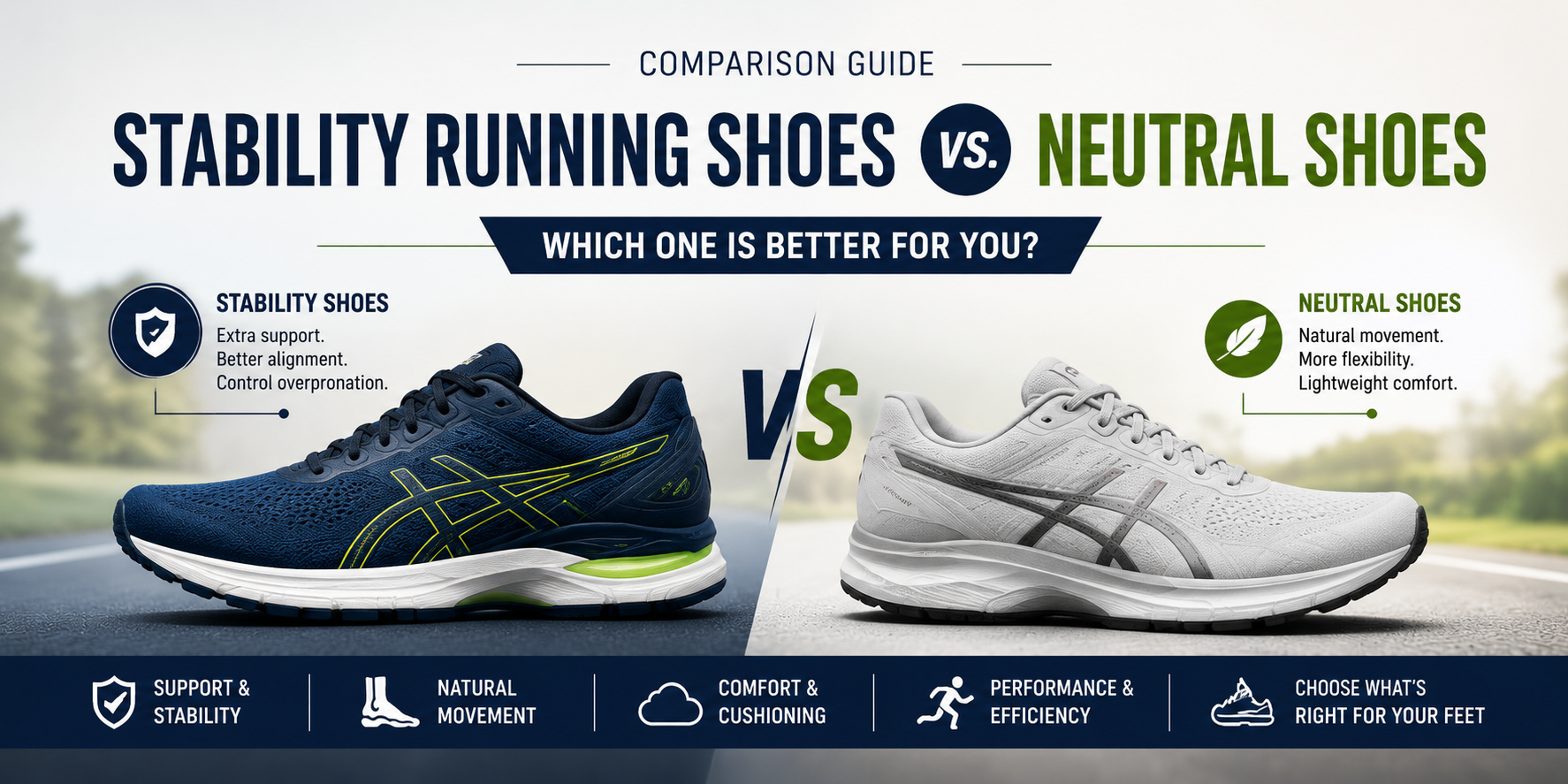
Choosing the right running shoes is one of the most important decisions for long-term comfort, foot stability, walking efficiency, and overall movement performance. Among the most common footwear categories available today, stability running shoes and neutral running shoes remain the two primary options recommended for different foot types and movement patterns.
Many people searching for comfortable footwear often struggle to understand the actual difference between stability shoes and neutral shoes. While both may appear visually similar, their internal structure, support systems, cushioning technologies, and intended use cases are significantly different.
The wrong shoe choice may contribute to discomfort, instability, foot fatigue, poor posture alignment, knee strain, and inefficient walking or running mechanics. On the other hand, selecting the right type of supportive footwear can improve comfort, reduce stress on the lower body, and enhance overall daily performance.
In this detailed guide, we compare stability running shoes vs neutral shoes in depth, including support levels, cushioning systems, overpronation control, flat feet compatibility, walking comfort, daily usability, and how to determine which option is best for your foot type and lifestyle.
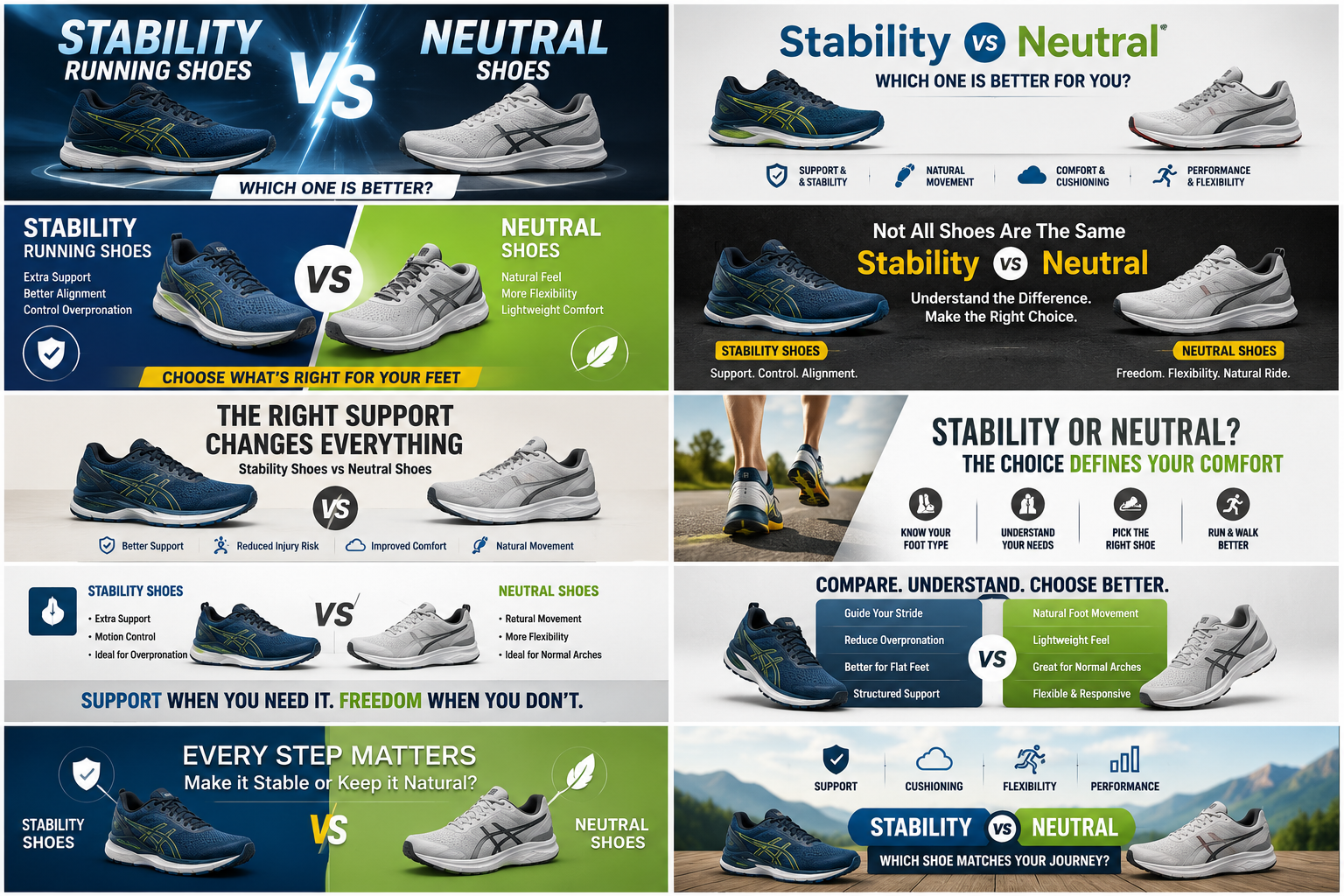
Stability Running Shoes vs Neutral Shoes
| Feature | Stability Running Shoes | Neutral Running Shoes |
|---|---|---|
| Arch Support | Enhanced | Moderate |
| Motion Control | Yes | Minimal |
| Flat Feet Friendly | Yes | Sometimes |
| Overpronation Support | Yes | No |
| Flexibility | Moderate | Higher |
| Cushioning Feel | Balanced Support | Soft/Natural |
| Best For | Support & Alignment | Natural Movement |
| Daily Walking | Excellent | Good |
| Beginner Friendly | Yes | Yes |
What Are Stability Running Shoes?
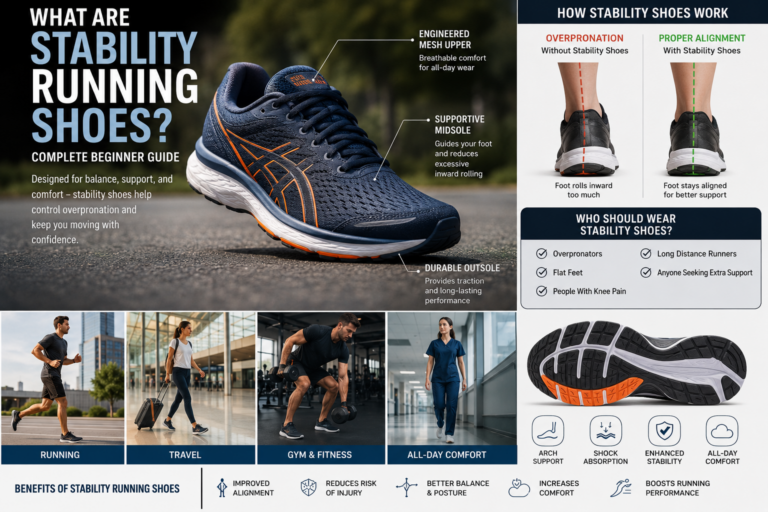
Stability running shoes are supportive footwear designed to improve foot alignment and reduce excessive inward foot rolling during movement, commonly referred to as overpronation.
These shoes typically include:
- reinforced midsoles
- structured arch support
- firmer heel counters
- stability guidance systems
- motion-control elements
The purpose of these features is to improve balance and maintain better foot positioning during walking or running activities.
Stability shoes are commonly recommended for individuals who:
- have flat feet
- overpronate while walking or running
- experience foot instability
- require additional arch support
- stand for long periods
- need extra comfort during daily activities
Modern stability running shoes have evolved significantly over the years. Older stability footwear was often bulky and rigid, while newer designs combine lightweight construction, breathable materials, responsive cushioning, and supportive stability systems without compromising comfort.
What Are Neutral Running Shoes?
Neutral running shoes are designed to support natural foot movement without adding additional motion-control features or corrective support systems.
These shoes typically focus on:
- cushioning
- flexibility
- natural stride movement
- lightweight comfort
- responsive foam technology
Neutral shoes are generally recommended for individuals who:
- have normal arches
- maintain balanced foot movement
- do not overpronate excessively
- prefer softer cushioning
- prioritize flexibility and responsiveness
Unlike stability shoes, neutral shoes allow the foot to move more naturally without attempting to guide alignment through additional structural reinforcement.
Modern neutral shoes are often extremely lightweight and highly cushioned, making them popular among runners, casual walkers, gym users, and lifestyle sneaker enthusiasts.
The Main Difference Between Stability and Neutral Shoes
The biggest difference between stability running shoes and neutral shoes is support structure.
Stability shoes are designed to actively help stabilize foot movement and reduce excessive inward rolling. Neutral shoes, however, prioritize unrestricted movement and softer cushioning without corrective support systems.
In simple terms:
- stability shoes guide movement
- neutral shoes allow natural movement
This difference becomes especially important for individuals with flat feet, overpronation, or alignment-related discomfort.
Understanding Overpronation
To properly understand the role of stability shoes, it is important to first understand overpronation.
Overpronation occurs when the foot rolls inward excessively during walking or running. While some inward movement is natural, excessive pronation may create uneven pressure distribution across the feet and lower body.
Common signs of overpronation may include:
- ankle instability
- foot fatigue
- heel discomfort
- knee pain
- uneven shoe wear
- inward collapsing arches
Stability running shoes are specifically engineered to help control this excessive movement and improve alignment efficiency.
Neutral shoes generally do not provide sufficient structural support for moderate or severe overpronation.
Are Stability Running Shoes Better for Flat Feet?
In many cases, yes.
Individuals with flat feet often benefit significantly from stability shoes because these shoes provide:
- structured arch support
- improved heel stability
- controlled foot motion
- better weight distribution
- enhanced alignment support
Flat feet reduce the natural arch support system of the foot, which may contribute to overpronation and discomfort during prolonged movement.
Stability shoes help compensate for reduced arch stability while improving comfort during:
- walking
- standing
- running
- gym workouts
- daily activities
Neutral shoes may still work for some individuals with mild flat feet, particularly if they prefer softer cushioning and do not experience instability symptoms.
However, users with moderate overpronation often find stability footwear more comfortable and supportive for long-term use.
Cushioning Differences
Another major difference between stability and neutral shoes is cushioning feel.
Neutral running shoes often prioritize:
- softer foam
- lightweight responsiveness
- smooth transitions
- flexible cushioning
These shoes typically provide a softer underfoot sensation designed for natural movement.
Stability shoes, on the other hand, combine cushioning with supportive structure. While many modern stability shoes are highly cushioned, they generally maintain:
- firmer midsole areas
- reinforced support zones
- more controlled transitions
The result is a more balanced combination of comfort and stability.
Which Shoes Are Better for Walking?
Both shoe types may work well for walking depending on foot mechanics and comfort preferences.
However:
- stability shoes are usually better for people needing support
- neutral shoes are often preferred for lightweight natural comfort
Stability walking shoes are especially useful for:
- standing all day
- long-distance walking
- work environments
- overpronation support
- flat feet comfort
Neutral walking shoes may feel softer and more flexible for users without alignment concerns.
Which Shoes Are Better for Running?
The answer depends largely on:
- foot type
- running style
- support needs
- pronation level
- comfort preference
Stability shoes are typically better for:
- overpronators
- flat feet
- support-focused runners
- beginner runners
- long-distance stability
Neutral shoes are often better for:
- normal arches
- efficient foot mechanics
- lightweight speed-oriented running
- users preferring softer cushioning
Neither category is universally “better.” The best choice depends on individual biomechanics and comfort needs.
Comfort Comparison
Comfort is highly subjective.
Some users prefer the structured support and stable feel of stability shoes, while others prefer the softer and freer sensation of neutral footwear.
Modern stability shoes have become significantly more comfortable and lightweight than older generations, narrowing the comfort gap between both categories.
Factors influencing comfort include:
- cushioning density
- arch shape
- heel fit
- shoe weight
- upper material
- outsole flexibility
Trying different models may help determine which style feels most comfortable for long-term daily use.
Stability Shoes vs Neutral Shoes for Daily Wear
Many modern stability running shoes work exceptionally well for everyday use.
Today’s supportive sneakers are commonly worn for:
- office work
- commuting
- travel
- casual walking
- gym workouts
- standing jobs
Neutral shoes are also extremely popular for daily lifestyle wear due to their lightweight comfort and flexible feel.
For users with:
- flat feet
- ankle instability
- overpronation
- posture discomfort
stability shoes may offer better long-term support during daily movement.
Which Shoes Are Better for Beginners?
Beginners often benefit from stability shoes if:
- they are unsure about foot mechanics
- they experience instability
- they have flat feet
- they notice inward foot rolling
The additional support can help improve confidence and reduce discomfort during walking or running.
Neutral shoes may still work perfectly for beginners with balanced foot alignment and no support-related issues.
Shoe Weight and Flexibility
Neutral shoes are usually:
- lighter
- softer
- more flexible
Stability shoes traditionally weighed more due to added support materials. However, modern lightweight stability running shoes now combine:
- breathable uppers
- lightweight foam
- flexible construction
- responsive cushioning
while still maintaining supportive stability systems.
This has made modern stability shoes far more versatile for everyday use.
Durability Comparison
Durability varies more by model quality than shoe category itself.
However, stability shoes sometimes provide:
- firmer midsoles
- reinforced structure
- more durable support components
which may improve long-term stability retention.
Neutral shoes with ultra-soft foam designs may compress faster depending on usage intensity and body weight.
How to Choose Between Stability and Neutral Shoes
The best way to choose between stability and neutral shoes is to evaluate:
- foot arch type
- walking pattern
- pronation level
- comfort preference
- daily activities
You may benefit from stability shoes if:
- your feet roll inward excessively
- you have flat feet
- you experience instability
- you need more support
- you stand for long hours
You may prefer neutral shoes if:
- you have normal arches
- your movement is balanced
- you prefer softer cushioning
- you prioritize lightweight flexibility
Common Mistakes When Choosing Running Shoes
Many users make footwear decisions based solely on:
- appearance
- trends
- branding
- price
without considering support requirements.
The wrong shoe category may contribute to:
- discomfort
- fatigue
- instability
- inefficient movement
Comfort, support, and fit should always take priority over aesthetics alone.
Frequently Asked Questions
Are stability shoes only for runners?
No. Many people use stability shoes primarily for walking, standing, work, travel, and daily comfort.
Can neutral shoes help with flat feet?
Sometimes. Individuals with mild flat feet and no instability symptoms may still feel comfortable in neutral shoes.
Are stability shoes heavier?
Older stability shoes were often heavier, but modern designs are increasingly lightweight and breathable.
Which type is better for overpronation?
Stability running shoes are generally better for overpronation because they provide structured support and motion guidance.
Can I wear stability shoes every day?
Yes. Many stability shoes are specifically designed for all-day comfort and daily wear.
Final Verdict: Which One Is Better?
Neither stability running shoes nor neutral shoes are universally better for everyone. The best choice depends on individual foot mechanics, support needs, comfort preferences, and intended use.
For individuals with:
- flat feet
- overpronation
- instability
- alignment discomfort
stability running shoes are often the better choice due to their supportive structure and controlled movement systems.
For users with:
- normal arches
- balanced movement
- preference for lightweight flexibility
neutral shoes may provide a softer and more natural movement experience.
Modern footwear technology has significantly improved both categories, offering better comfort, lighter materials, and more versatile daily usability than ever before.
Ultimately, the right shoe is the one that helps you move comfortably, maintain proper support, and reduce unnecessary strain during walking, running, and everyday activities.