Don't miss our holiday offer - up to 50% OFF!

What Are Stability Running Shoes? Complete Beginner Guide

If you’ve ever finished a walk, jog, or long workday with aching arches, sore knees, or that annoying “heavy feet” feeling, you’re not alone. A lot of people blame age, weight, or bad posture. But honestly? Sometimes the problem starts with the shoes. You buy a pair of trendy sneakers online because they look good in photos. The first day feels fine. The second day? Still okay. Then suddenly, after a week of commuting, standing at work, grocery runs, gym sessions, or evening walks around the neighborhood, your feet begin begging for mercy.
That’s exactly where stability running shoes change the game.
For many people in the USA — especially professionals, casual runners, travelers, healthcare workers, teachers, gym-goers, and sneaker lovers — stability shoes quietly become the difference between “I can’t wait to sit down” and “I could honestly keep going.”
In this complete beginner guide, we’ll break down:
- What stability running shoes actually are
- Who should wear them
- How they help with foot pain and balance
- The difference between stability and neutral shoes
- Common mistakes beginners make
- What features truly matter
- How to choose the right pair
- And why the right sneaker can completely change your daily comfort
Whether you’re walking through New York streets, standing in a busy hospital, traveling through airports, hitting the treadmill, or just trying to protect your feet long-term, this guide will help you understand everything you need to know before buying your next pair.
What Are Stability Running Shoes? Complete Beginner Guide
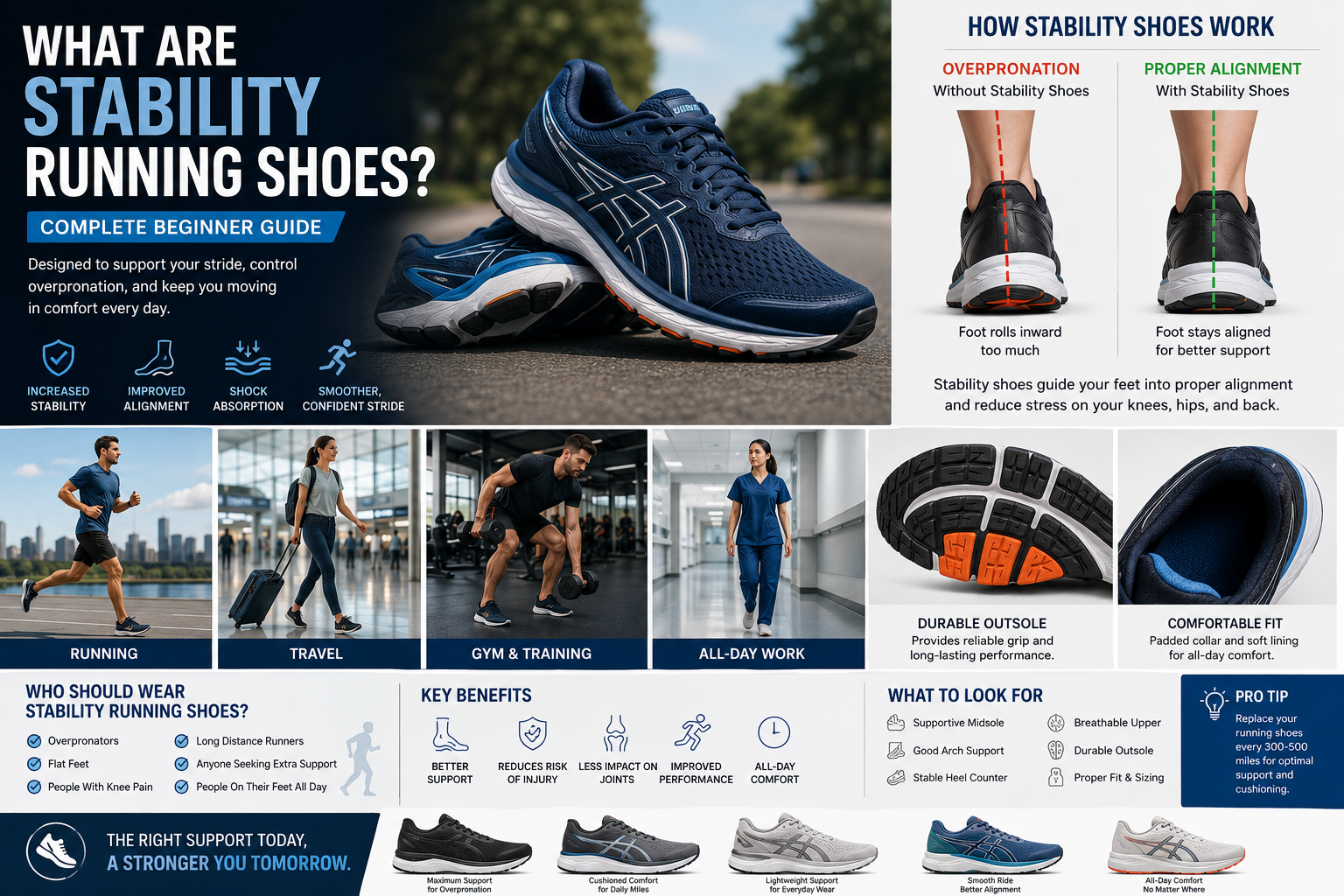
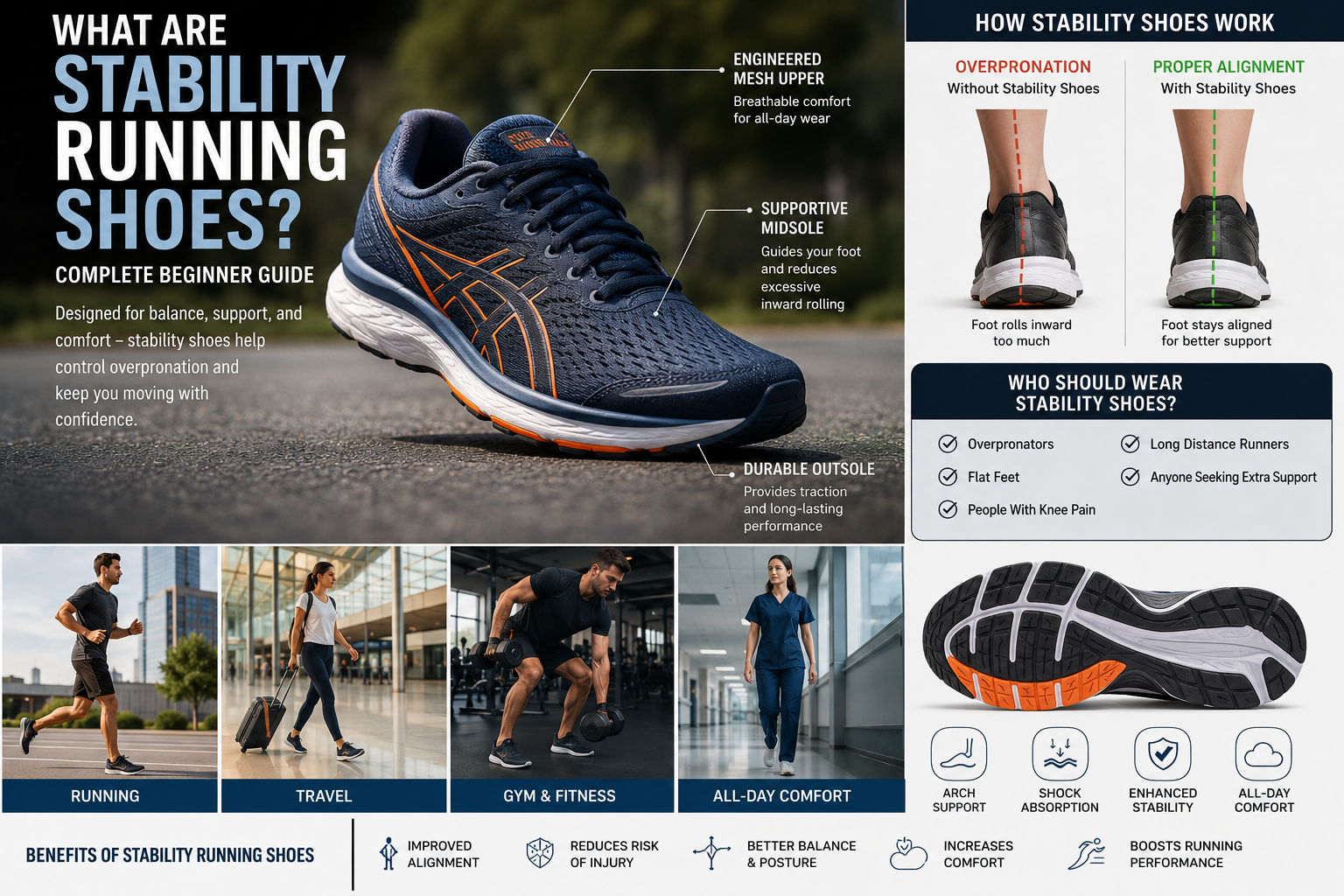
Stability running shoes are specially designed sneakers that provide extra support, balance, and motion control for people whose feet roll inward too much while walking or running. This inward rolling movement is called overpronation.
Now, overpronation sounds technical, but the concept is simple.
When your foot lands on the ground, it naturally rolls slightly inward to absorb shock. That’s normal. But for some people, the foot rolls too far inward. Over time, that extra movement can place stress on the ankles, knees, hips, and lower back.
Stability shoes help guide the foot into a more balanced position.
Think of them like supportive guardrails for your stride.
They don’t force your feet into unnatural movement. Instead, they help create smoother alignment, improved balance, better weight distribution, and more controlled motion.
That’s why stability running shoes are often recommended for:
- Flat feet
- Mild to moderate overpronation
- Long-distance walking
- Standing all day
- Heavy daily wear
- Beginners starting fitness routines
- People recovering from foot fatigue
- Travelers who walk for hours
And no — they’re not just for runners anymore.
Modern stability sneakers are now worn by:
- Nurses
- Office professionals
- Warehouse workers
- Travelers
- Students
- Retail employees
- Casual fashion sneaker fans
- Everyday walkers
The comfort difference can honestly feel shocking once you experience the right pair.
Why Stability Running Shoes Matter More Than Most People Think
Most people don’t notice poor foot support immediately.
That’s the dangerous part.
The discomfort builds slowly.
Maybe your heels hurt after work.
Maybe your knees feel stiff climbing stairs.
Maybe your lower back aches after walking all day.
Maybe your ankles feel tired during travel.
The problem often starts lower than people realize.
Your feet are the foundation of your entire body.
When they’re unstable, everything above them compensates.
That’s why stability running shoes matter.
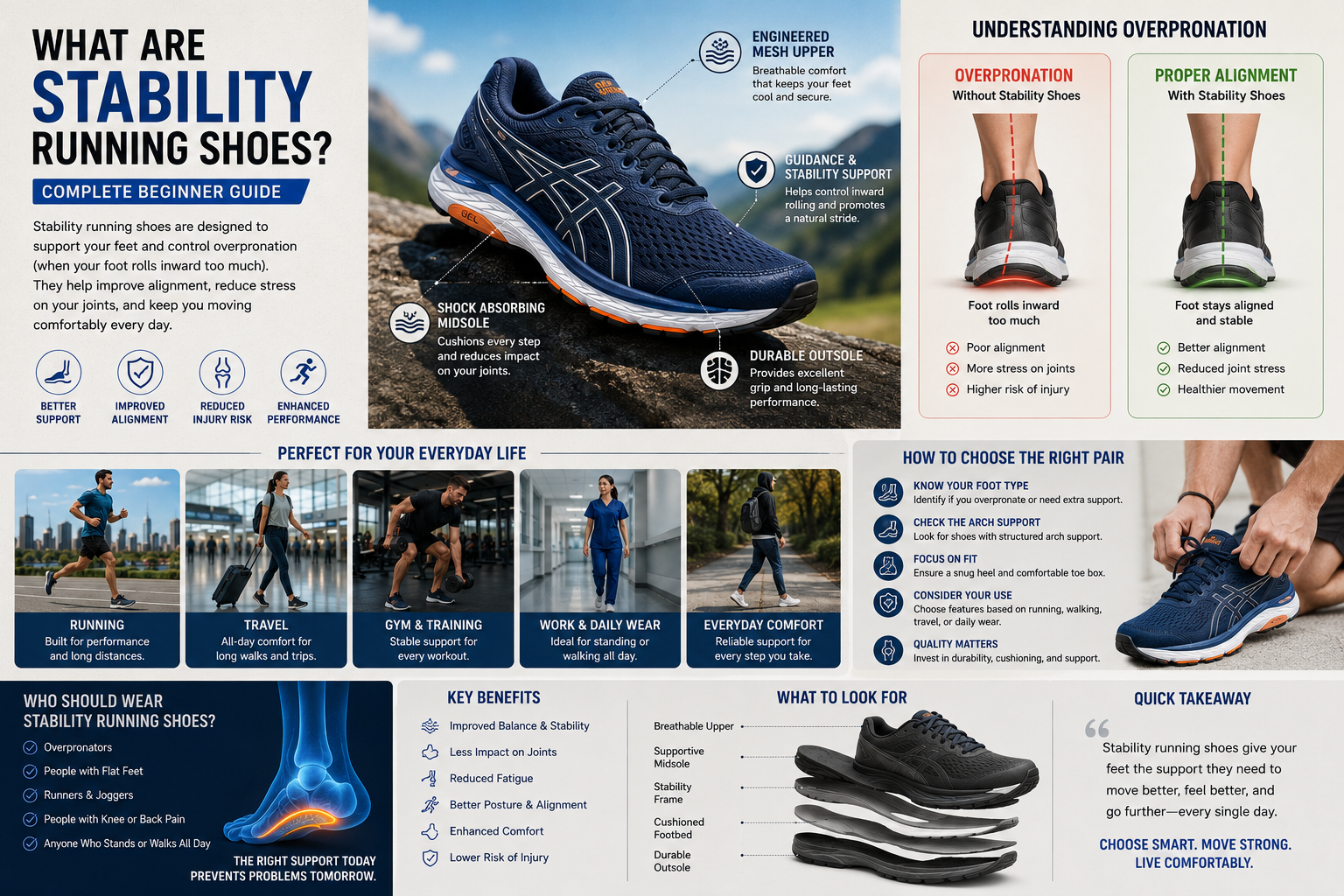
A quality stability sneaker helps:
- Reduce unnecessary inward foot rolling
- Improve posture alignment
- Minimize stress on joints
- Increase long-term walking comfort
- Support energy efficiency
- Reduce fatigue during extended wear
For beginners especially, stability shoes can make exercise feel dramatically easier and safer.
A lot of people quit running or fitness not because they hate exercise — but because their shoes hurt.
That distinction matters.
Why Stability Running Shoes Stand Out
The sneaker market is crowded.
Every brand claims:
- “Maximum comfort”
- “Premium cushioning”
- “Cloud-like feel”
- “All-day support”
But stability shoes stand apart because they solve a specific biomechanical problem instead of just adding softness.
And that difference matters in real life.
Cushioning Alone Isn’t Enough
Soft shoes can feel amazing for the first 15 minutes.
But if your foot collapses inward repeatedly, ultra-soft foam without support may actually increase instability.
That’s why some people buy heavily cushioned sneakers and still feel discomfort later.
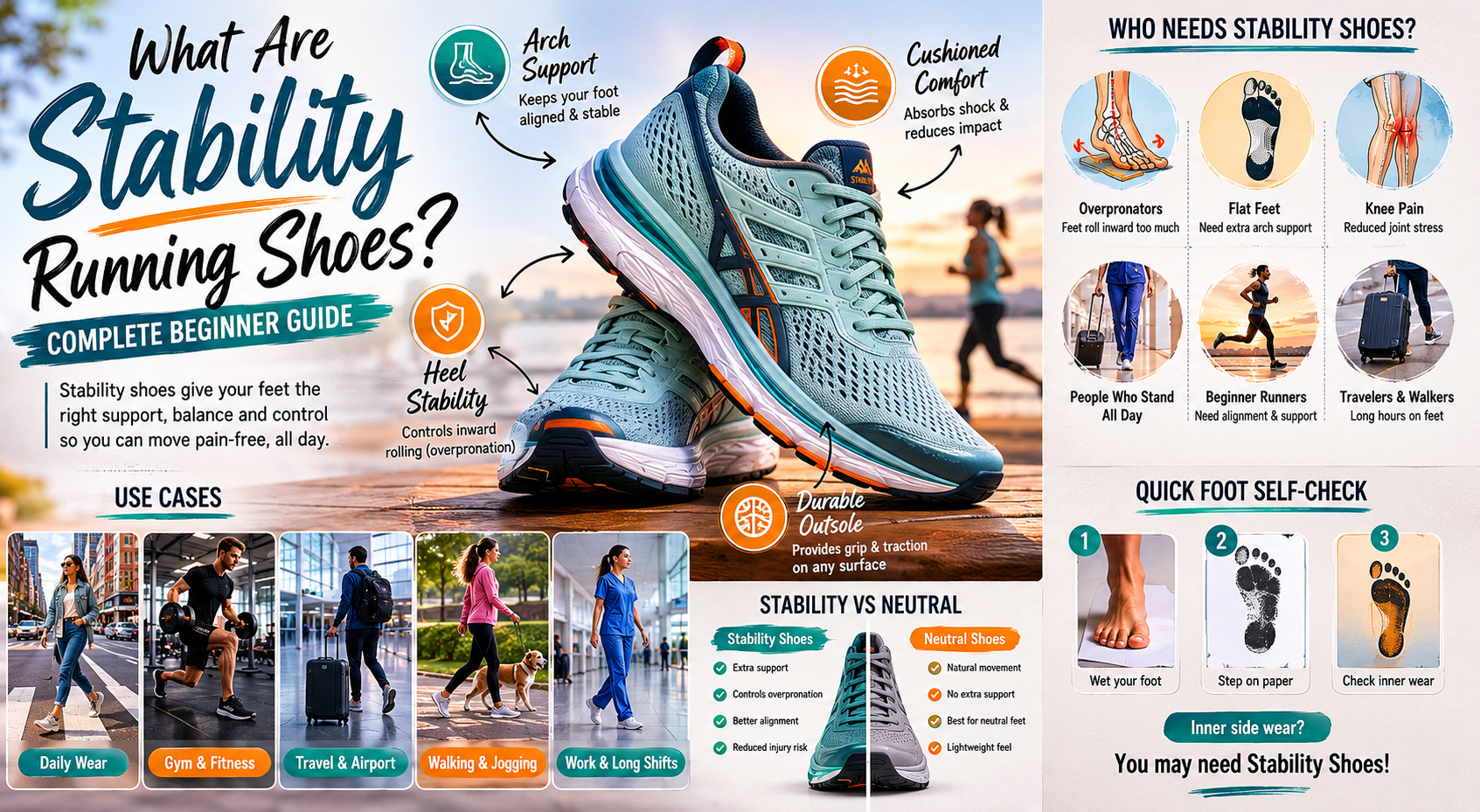
Stability shoes combine:
- Cushioning
- Structural support
- Controlled motion
- Arch guidance
- Heel stability
The result is a more balanced walking or running experience.
Stability Shoes vs Neutral Running Shoes
This is one of the most searched questions online.
Here’s the easiest explanation.
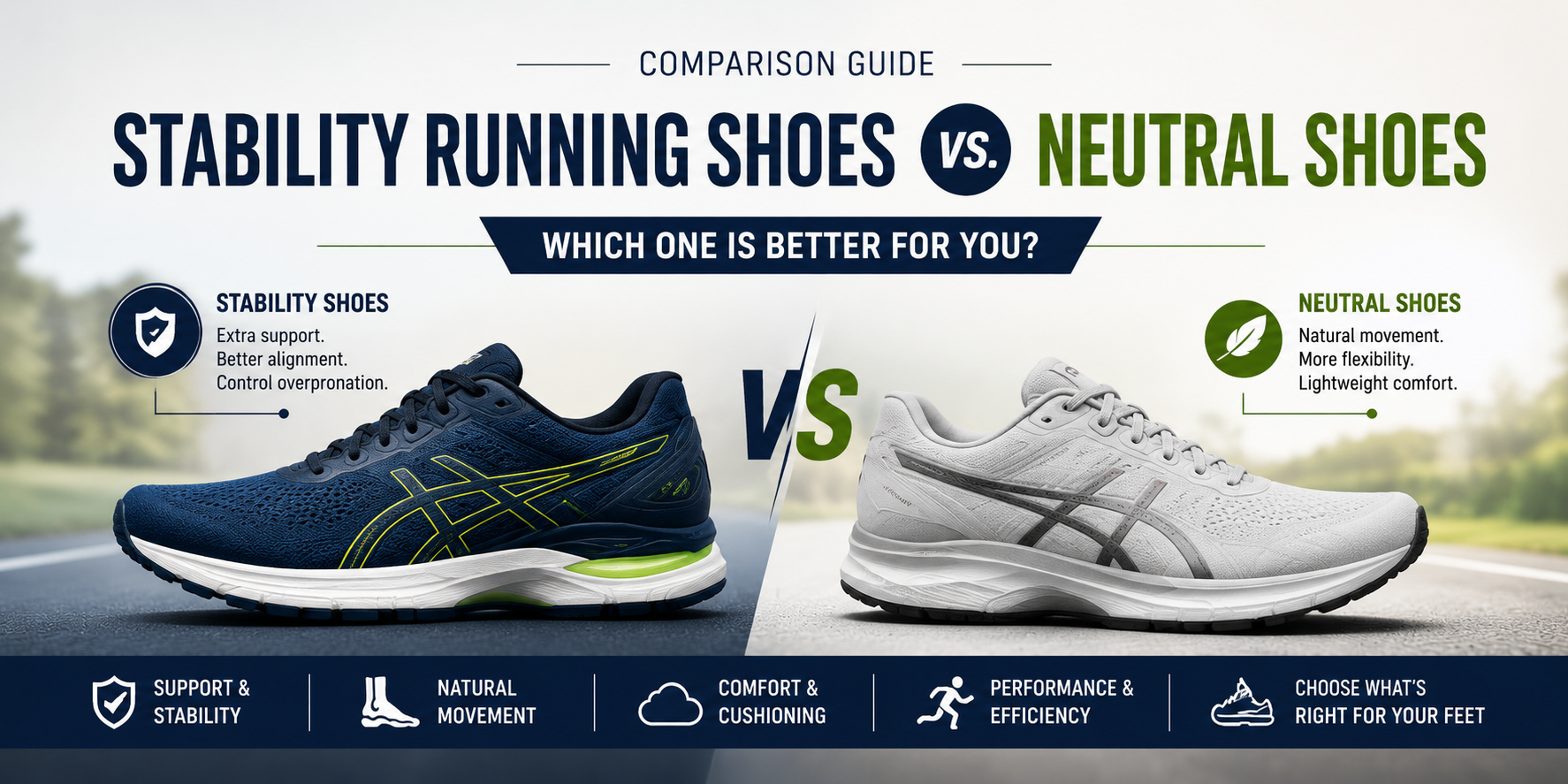
Neutral Running Shoes
Neutral shoes are designed for people whose feet move naturally without excessive inward rolling.
Best for:
- Neutral gait
- High arches
- Efficient runners
- Lightweight daily wear
Stability Running Shoes
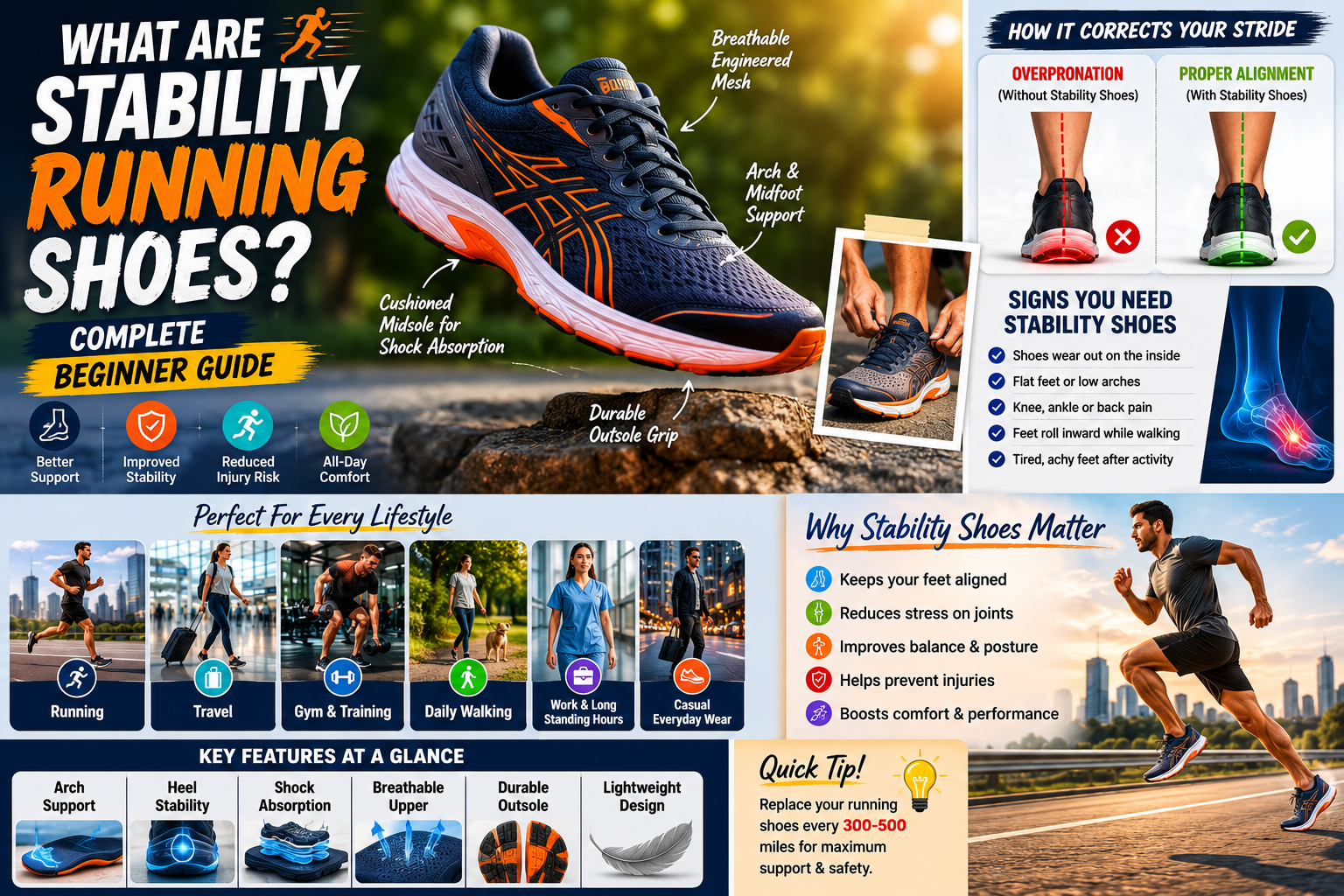
Stability shoes are designed for people needing additional support and guidance.
Best for:
- Overpronation
- Flat feet
- Mild alignment issues
- Long standing hours
- Heavier body weight
- Fatigue prevention
The key difference:
Stability shoes actively help control movement.
Neutral shoes mostly allow natural movement.
Neither is “better” universally.
It depends on your feet.
How to Know If You Need Stability Running Shoes
A surprising number of Americans wear the wrong shoe type.
Here are some common signs you may benefit from stability shoes.
1. Your Shoes Wear Out Unevenly
Check the bottom soles of your old sneakers.
If the inner side wears down faster, you may be overpronating.
2. Your Ankles Roll Inward
Stand naturally in front of a mirror.
If your ankles tilt inward noticeably, stability support may help.
3. You Get Foot Fatigue Quickly
If your feet feel exhausted after basic daily activities, support could be the missing piece.
4. Knee or Lower Back Discomfort
Poor foot alignment often travels upward through the body.
5. Flat Feet
Flat-footed individuals commonly benefit from stability shoes because they help distribute pressure more evenly.
6. You Stand All Day
Healthcare workers, teachers, retail staff, and warehouse workers often love stability sneakers because they reduce long-hour fatigue.
Features of Stability Running Shoes (And Why They Matter)
A lot of beginners buy shoes based purely on appearance.
But great stability shoes are built around performance engineering.
Let’s break down the features that actually matter.
1. Structured Midsole Support
This is the heart of stability footwear.
The midsole is designed to prevent excessive inward foot rolling.
Real-Life Benefit
You feel more balanced during long walks, work shifts, or treadmill sessions.
Instead of your feet collapsing inward late in the day, the shoe maintains support.
2. Arch Support
Stability shoes usually provide enhanced arch structure.
Real-Life Benefit
Your feet feel less strained after hours of standing or walking.
This becomes incredibly noticeable during travel days or long commutes.
3. Heel Stabilization
A reinforced heel counter keeps the rear foot aligned.
Real-Life Benefit
Better balance.
Reduced wobbling.
More secure movement.
Especially helpful when turning quickly or walking on uneven surfaces.
4. Shock Absorption
Modern stability shoes combine support with cushioning technology.
Real-Life Benefit
Less impact stress on:
- Knees
- Hips
- Lower back
This is huge for runners and heavier individuals.
5. Durable Outsole Grip
Traction matters more than people realize.
Real-Life Benefit
Improved grip during:
- Rainy sidewalks
- Gym floors
- Airport walking
- Daily commuting
6. Breathable Upper Materials
Most quality stability sneakers use mesh or engineered knit materials.
Real-Life Benefit
Cooler feet during:
- Summer weather
- Long shifts
- Gym sessions
- Travel
Real-Life Situations Where Stability Shoes Shine
This is where stability shoes become genuinely impressive.
Because their benefits aren’t theoretical.
They show up in daily life.
Office Professionals
Imagine walking through downtown Chicago in dress shoes all week, then switching to supportive stability sneakers during commuting or casual wear.
Your legs notice the difference immediately.
Many professionals now prioritize comfort over flashy fashion because foot fatigue impacts productivity.
Nurses and Healthcare Workers
Hospital shifts can involve:
- 10,000–20,000 steps daily
- Long standing hours
- Constant movement
Stability shoes help reduce fatigue accumulation.
That’s why supportive running shoes are incredibly popular among healthcare professionals in the USA.
Travelers
Airport walking is brutal.
Especially during:
- Layovers
- International travel
- City tourism
- Business trips
A good stability shoe can genuinely make travel less exhausting.
Gym Beginners
Many beginners start fitness journeys in unsupportive fashion sneakers.
That mistake leads to discomfort quickly.
Stability shoes provide:
- Better balance
- Improved form
- More confidence
- Reduced joint stress
Daily Walking
Even casual neighborhood walks become more enjoyable when your feet feel stable and supported.
Common Beginner Mistakes When Buying Stability Running Shoes
This part is important.
A lot of people waste money because they buy based on hype instead of function.
Mistake #1: Buying the Trendiest Sneaker
TikTok-famous shoes aren’t automatically good for your feet.
Aesthetic matters.
But support matters more.
Mistake #2: Ignoring Foot Shape
Flat feet, wide feet, narrow feet, and high arches all affect comfort.
Always consider your natural foot structure.
Mistake #3: Choosing Shoes That Are Too Soft
Ultra-soft cushioning without stability can increase instability for overpronators.
Balance matters more than softness alone.
Mistake #4: Wearing Incorrect Sizes
A shocking number of Americans wear the wrong shoe size.
Your toes need room to move naturally.
Mistake #5: Using Running Shoes Past Their Lifespan
Support breaks down gradually.
Even if shoes still “look okay,” internal cushioning and structure may be worn out.
The Psychology of Comfortable Sneakers
Here’s something most articles never discuss.
Comfort changes behavior.
When shoes feel good:
- People walk more
- Stay active longer
- Feel more energetic
- Experience less mental fatigue
It sounds small.
But it isn’t.
A supportive pair of stability shoes can quietly improve daily quality of life.
That’s why loyal sneaker buyers become emotionally attached to certain models.
Once your feet experience proper support, it’s hard to go backward.
Are Stability Running Shoes Good for Walking?
Absolutely.
In fact, many people primarily use them for walking rather than running.
Stability shoes are excellent for:
- Daily walking
- Power walking
- City commuting
- Standing jobs
- Travel
- Casual wear
The structured support helps reduce fatigue during extended movement.
Can You Wear Stability Running Shoes Casually?
Yes — and this trend is growing rapidly in the USA.
Modern stability sneakers no longer look bulky or “medical.”
Many newer designs blend:
- Athletic style
- Streetwear aesthetics
- Lifestyle comfort
- Everyday versatility
That’s why sneaker enthusiasts increasingly wear performance shoes casually.
Comfort culture has become mainstream.
Best People Who Benefit From Stability Shoes
Flat-Footed Individuals
Extra support helps improve alignment and reduce strain.
Overpronators
The primary target audience for stability footwear.
Heavier Individuals
Additional support helps manage pressure distribution.
Workers on Their Feet All Day
Teachers, nurses, retail staff, warehouse workers, airport staff.
Beginner Runners
Supportive shoes help reduce injury risk while building consistency.
Product Specifications Guide
Here’s a simple breakdown of what to look for when shopping for stability running shoes.
| Specification | What to Look For |
|---|---|
| Midsole | Supportive foam with stability structure |
| Upper Material | Breathable mesh or knit |
| Heel Support | Reinforced heel counter |
| Outsole | Durable rubber traction |
| Cushioning | Balanced comfort + support |
| Arch Support | Moderate to high |
| Fit | Snug heel, roomy toe box |
| Weight | Lightweight but supportive |
| Usage | Running, walking, daily wear |
| Durability | Long-lasting outsole and foam |
Stability Running Shoes for Travel
Travelers often underestimate footwear importance.
Bad shoes can ruin vacations.
Imagine:
- Walking through Las Vegas all day
- Exploring New York City
- Airport layovers
- Theme parks
- Business conferences
Supportive stability shoes help preserve energy.
That means:
- Less soreness
- Better mood
- Longer activity endurance
- More enjoyable travel experience
Stability Running Shoes for Gym Use
A lot of gym beginners ask this question.
Yes — stability shoes can work well for:
- Treadmill running
- Walking workouts
- Cardio
- Light strength training
However, for heavy lifting like squats or deadlifts, dedicated training shoes may be better.
Why Americans Are Prioritizing Comfort More Than Ever
There’s been a noticeable shift in sneaker culture.
People still love style.
But comfort has become non-negotiable.
Especially after:
- Remote work trends
- Increased walking lifestyles
- Travel recovery
- Health awareness growth
Consumers now want sneakers that:
- Look good
- Feel good
- Perform well
- Last longer
Stability shoes fit perfectly into that movement.
Social Proof Style Experiences
One of the reasons stability running shoes continue growing in popularity is simple:
People genuinely notice the difference.
A teacher who spends eight hours standing in classrooms.
A dad walking through Disney parks with his family.
A nurse finishing double shifts.
A traveler running between airport terminals.
The stories are surprisingly similar.
Many people say:
“I didn’t realize how uncomfortable my old shoes were until I switched.”
That realization creates long-term loyalty.
Because comfort becomes addictive.
How Long Do Stability Running Shoes Last?
Most quality stability running shoes last approximately:
- 300–500 miles for runners
- 8–12 months for regular daily wear
But lifespan depends on:
- Body weight
- Walking style
- Usage frequency
- Terrain
- Shoe quality
If you notice:
- Flattened cushioning
- Reduced support
- Uneven wear
- Foot discomfort returning
…it’s probably time for a replacement.
Stability Running Shoes and Injury Prevention
No shoe can guarantee injury prevention.
But proper support can reduce unnecessary stress and improve alignment.
That matters tremendously over time.
Especially for:
- Beginner runners
- Overweight individuals
- Long-distance walkers
- Workers on hard surfaces
Consistency becomes easier when your body feels supported.
How to Choose the Right Stability Running Shoe
Here’s a beginner-friendly approach.
Step 1: Identify Your Foot Type
Flat feet?
Neutral arches?
High arches?
Knowing this changes everything.
Step 2: Understand Your Main Use
Daily wear?
Walking?
Running?
Travel?
Work shifts?
Different use cases prioritize different features.
Step 3: Prioritize Fit Over Hype
The best-looking sneaker means nothing if your feet hurt.
Step 4: Test End-of-Day Comfort
Shoes should feel supportive even after extended wear.
Not just during the first five minutes.
Step 5: Don’t Ignore Width
Wide feet need proper toe room.
Cramming feet into narrow shoes causes long-term discomfort.
Use Cases: Where Stability Running Shoes Truly Excel
Daily Wear
Supportive enough for long routines without sacrificing comfort.
Work
Especially useful for:
- Teachers
- Nurses
- Retail workers
- Warehouse staff
- Hospitality professionals
Travel
Excellent for airports, tourism, walking-heavy trips.
Walking
One of the best categories for everyday walkers.
Beginner Fitness
Perfect for starting:
- Running
- Cardio
- Walking programs
- Weight loss journeys
Casual Lifestyle
Modern designs blend performance and fashion surprisingly well.
FAQ: What Are Stability Running Shoes? Complete Beginner Guide
What are stability running shoes used for?
Stability running shoes are designed to provide extra support and reduce excessive inward foot rolling (overpronation). They help improve balance, comfort, and alignment during walking or running.
Are stability running shoes good for flat feet?
Yes. Many people with flat feet benefit from stability shoes because they provide enhanced arch support and motion control.
Can you walk in stability running shoes every day?
Absolutely. Stability shoes are excellent for daily walking, commuting, work, and long standing hours.
What is the difference between stability and neutral running shoes?
Neutral shoes allow natural foot movement, while stability shoes provide additional support to control overpronation and improve alignment.
Are stability shoes only for runners?
No. Many people wear them for work, travel, gym sessions, and casual daily use.
How do I know if I overpronate?
Signs include uneven shoe wear, inward ankle rolling, flat feet, knee discomfort, and foot fatigue after walking.
Do stability running shoes help with knee pain?
They can help reduce stress caused by poor foot alignment, which may improve comfort for some people experiencing knee strain.
Final Thoughts: What Are Stability Running Shoes? Complete Beginner Guide
At first glance, stability running shoes may seem like just another sneaker category.
But once you understand how much your feet influence comfort, movement, energy, posture, and daily performance, the importance becomes obvious.
The right stability shoe doesn’t just help you run.
It helps you move through life more comfortably.
Whether you’re walking through airports, standing during long shifts, starting a fitness journey, exploring city streets, or simply trying to protect your feet long-term, supportive footwear matters more than most people realize.
And honestly?
Once you experience genuine stability, balance, and all-day comfort, it’s very difficult to settle for ordinary sneakers again.